A tavern name is a promise about the evening ahead. The grimoire does not certify the promises. The Sleeping Griffin promises quiet rooms; the Thirsty Bard promises the opposite; the Last Candle promises that after this, there is nothing but road and dark, so you may as well have another.
The formula is an adjective and a creature, or an adjective and an object, hung from an iron bracket and repainted every decade or so. The older the tavern, the stranger the pairing, because the original story has been lost and the sign was too expensive to change. Nobody at the Drowned Kraken remembers the flood. The kraken, presumably, does.
A good tavern name does half the DM's work: it seats the mood before anyone speaks. Velvet anything means the upstairs is fancier than the down. Broken anything means the bouncer is the load-bearing employee. Grinning anything means the keeper knows something, and the price of learning it is posted nowhere.
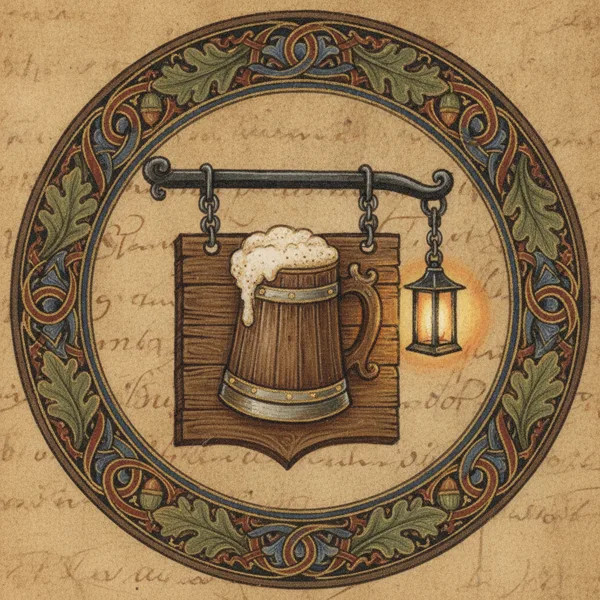
The sign outside a tavern is a contract about what happens inside. The pattern every publican knows: an adjective and an animal promise comfort, the Amber Stag, the Sleeping Cat; an object and a verb promise trouble, the Broken Flagon, the Hanged Crow. Patrons read the sign in the dark, half-drunk, from horseback, which is why good tavern names are two words, concrete, and paintable. If a name cannot be painted on a swinging board by a middling village artist, the grimoire declines to deal it.
The archivist keeps a private taxonomy of what tavern names do at the table. The party will meet in your tavern, return to it, defend it, and eventually mourn it, so the name gets said more than any NPC's. Choose it the way you would choose a recurring character: the Gilded Antler is a patron, the Rusted Blade is a warning, and the Last Candle is, sooner or later, a session title. Name the tavern for the campaign you intend to run in it.
The elements of the old tongue
Prancing- merry
Drowned- flood-survivor
Gilded- pretends to wealth
Crooked- honest about itself
Laughing- good company
Sleeping- quiet rooms
Thirsty- generous pours
Wandering- for travelers
Broken- survived a brawl or ten
Copper- cheap and warm
Salty- sailor's haunt
Velvet- upstairs is fancier
Tavern Names From the Grimoire
- The Prancing Wyvern merry; wyvern
- The Sleeping Candle quiet rooms; candle
- The Crooked Rose honest about itself; rose
- The Drowned Flagon flood-survivor; flagon
- The Velvet Hearth upstairs is fancier; hearth
- The Salty Griffin sailor's haunt; griffin
- The Copper Pony cheap and warm; pony
- The Prancing Anchor merry; anchor
- The Thirsty Cauldron generous pours; cauldron
- The Drowned Candle flood-survivor; candle
- The Bottomless Griffin the cellar is deep; griffin
- The Sleeping Lantern quiet rooms; lantern
- The Grinning Cauldron the keeper knows things; cauldron
- The Velvet Cauldron upstairs is fancier; cauldron
- The Wandering Flagon for travelers; flagon
- The Sleeping Kraken quiet rooms; kraken
- The Broken Pony survived a brawl or ten; pony
- The Copper Lantern cheap and warm; lantern
- The Crooked Dagger honest about itself; dagger
- The Velvet Stag upstairs is fancier; stag
Margin notes
What makes a memorable tavern name?
A pairing with tension in it: an adjective that argues with its noun. The Drowned Kraken, the Gilded Goblin, the Silent Bard. If the sign makes a traveler ask one question, the name has already paid its rent.
How should the tavern's name match its clientele?
Read the adjective: Copper means cheap and warm, Velvet means merchants upstairs, Last means mercenaries, smugglers, and anyone else who prefers the edge of the map. The noun is decoration; the adjective is the dress code.
Do taverns and inns follow different naming rules?
Inns sell sleep, so their names promise safety (the Sleeping Griffin, the Warm Hearth). Taverns sell evenings, so their names promise stories. An establishment doing both usually names itself for the safer trade and lets the taproom build its own reputation.
Why are tavern names always two words?
Because they live on a painted sign read at dusk by tired travelers. Adjective plus animal promises rest, object plus violence promises card games with knives. The format is a contract, and patrons hold taverns to it.
Last inscribed 2026-10-01